
Keynote Speakers

Ethan Tapper
Forester, the author of How to Love a Forest, and the founder of Bear Island Forestry and Bear Island Consulting
Ethan Tapper is a forester, ecologist, content creator, and the bestselling author of How to Love a Forest: The Bittersweet Work of Tending a Changing World.
For more than a decade, Ethan has been recognized as a thought-leader in the world of ecosystem stewardship, winning numerous regional and national awards for his work. More recently, he has been recognized as a writer – since its publication in 2024, How to Love a Forest has been named the winner of the 2025 New England Book Award for nonfiction, and received international acclaim. His highly-anticipated second book – The Forest Year: Finding Hope in a World Worth Saving – will be published in October, 2026, and is available for pre-order now.
Ethan’s message of relationship, responsibility and hope reaches millions of people each year through his writing, social media channels with hundreds of thousands of followers, and the hundreds of walks, talks and keynotes that he delivers across North America each year.
Ethan works, writes and runs a small consulting forestry business from his home at Bear Island – his 175-acre working forest, homestead, orchard and sugarbush in Vermont – and plays in his punk band, The Bubs.
Mio Urata
Miyawaki Method Forest Maker
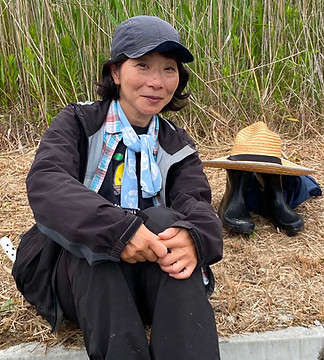
Mio Urata is an enthusiastic Miyawaki forester who has devoted herself to restoring forests for more than 20 years.
She has planted trees, prepared making planting sites, organized planting events, instructed volunteers, and maintained forests at more than 150 locations in Japan and abroad, many of them with the late Professor Miyawaki.
She is now in charge of public relations and social media for the organization Creating Native Forests for Life 2020 (in Japanese, “Inochi no Morizukuri 2020”), which is an association of Miyawaki forest-making experts in Japan.
Speakers & Panelists

Alexandra Ionescu
Associate Director of Regenerative Projects
Biodiversity For a Livable Climate
Alexandra Ionescu is the Associate Director of Regenerative Projects at Biodiversity for a Livable Climate, where she leads the Miyawaki Forest Program—supporting the planting of miniforests, cultivating partnerships, and guiding strategic planning. She led the development of the inaugural Northeast Miniforest Summit in 2025 and continues to lead its planning and evolution. She focuses on urban afforestation using the Miyawaki Method, beaver-engineered landscapes, and floating wetlands using natural materials. A lifelong student of how nature works, Alexandra’s mindset—shaped by her graduate studies and professional certification in Biomimicry—is about cultivating propensities for the web of life to emerge and restore ecological function. Through photography, long-term observation, and her artistic practice, she documents the landscapes, restoration projects, and ecological relationships she encounters as a way of learning from the living systems that unfold over time. Alexandra serves in an administrative role on the Board of Directors of the Beaver Institute and is a co-leader of the Beaver Network for East Coast/Rhode Island. Alexandra also serves as an advisory member of the Loeb Fellowship at the Rhode Island School of Design.

Angelina Lee
Documentary Filmmaker
Punk Pebble Productions
Angelina Lee is an environmental filmmaker based in Los Angeles. She was named an Obama Fellow at Occidental College’s Barack Obama Scholars Program, and through their scholarship program produced a documentary about regenerative agriculture, “The Big Raise.” This documentary screened at film festivals in Washington, D.C., Canada, New York City, and the Grauman’s TCL Chinese Theatre in Hollywood. Her most recent work, the feature-length documentary “Making a Mini-Forest,” covers the emerging international movement to plant "mini-forests" in cities to address climate change and support local biodiversity. This film premiered at the G20 Global Land Initiative’s Restoration Pavilion at the UN Convention to Combat Desertification's COP16 in Riyadh, Saudi Arabia, and has been shown in the U.S., France, Canada, Australia, Germany, Switzerland, Japan, and Austria.

Anne Morin
Massachusetts Master Gardener
Friends of Veasey Park, Inc.
Anne Morin holds a bachelor’s degree in microbiology and a master’s degree in leadership. She spent 43 years at a contract research organization, where she worked in leadership positions in both laboratory operations and business optimization. After retiring in 2024, she became a certified Master Gardener through the Massachusetts Master Gardener Association and now serves as a Lifetime Master Gardener. Anne is also the treasurer for the nonprofit organization Friends of the Plum Island Lighthouse, Inc. in Newburyport, Massachusetts, and an active volunteer with Essex County Greenbelt Association, Inc., a nonprofit land conservation organization.

Brad Oberle, PhD
Associate Curator
New York Botanical Garden
Brad Oberle’s research supports diverse, resilient communities through deeper understanding of the complex relationship between life and climate. As an Associate Curator at the New York Botanical Garden, Brad focuses on plants and microbes, which interact to drive the global carbon cycle in habitats transformed by people. To identify where, when and why ecosystems face tipping points and species face extinction, Brad draws techniques from ecology, evolution and statistics. Then, to translate novel science into effective action, he partners with community groups, natural resource managers and policy makers. Together, they advance innovative, practical solutions to the climate and biodiversity crises. Brad’s current research addresses global change impacts on urban forests, optimizing carbon sequestration from small scale afforestation projects, mangrove restoration and conservation biology in Bromeliaceae.

Bram Gunther
VP of Science and Development
Plan it Wild
Bram Gunther is the former chief of forestry. horticulture, and natural resources for the New York City Parks Dept. He is the co-founder and first president of the Natural Areas Conservancy, a nonprofit with the goal to restore, conserve, and monitor New York City's natural areas. In the role of VP at Plan it Wild, he lead's the company's development of a rewilding measurement tool called Wildr, co-leads the Pocket Forest program, and oversees partnerships and development.

Caseylee Bastien, RLA, CPSI
Landscape Architect/ Ecologist, Senior Associate
BSC Group, Inc.
Bram Gunther oversees the development of science programs, like the Wildr system to measure the impact of rewilding, to expand PiW's mission and goals. He oversees development of partnerships and initiatives to advance PiW. MicroForests has been an especially successful program for PiW. He was the chief of forestry, horticulture, and natural resources for New York City Parks & Recreation, the cofounder of the Natural Areas Conservancy, and now on its board of directors. He's also on the board of directors of Hilltop Hanover Farm, a sustainable farm and native plant nursery based in Westchester, NY.

Daniela Shebitz, PhD
Professor
Kean University
Dr. Daniela Shebitz has been an Environmental and Sustainability Science professor at Kean University for the past 20 years. She holds a Ph.D. in Ecosystem Science from the University of Washington (2006), as well as a B.S. and M.S. from the SUNY College of Environmental Science and Forestry. An ethnobotanist, conservation biologist and plant ecologist, her work centers on integrating traditional and local knowledge into the restoration of culturally significant plants and ecosystems. Her work collaborating with community partner Groundwork Elizabeth on installing and monitoring microforests using the Miyawaki Method has been highlighted in the New York Times (50 States/50 Fixes) and NBC's TODAY. Dedicated to advancing sustainability in both education and the broader community, Dr. Shebitz recently completed serving as the chair of the Department of Environmental and Sustainability Sciences for 8 years. She also recently completed serving as the President of the Society of Ethnobiology and the co-Chair of Kean University’s President’s Sustainability Task Force. Now her focus also includes serving as the Faculty Director of Kean's Center for Community Engaged Learning and serving on the Governor-appointed Natural Resource Restoration Advisory Council.

Demian Willette, PhD
Associate Professor
Loyola Marymount University
Demian Willette is an associate professor in the Biology Department at Loyola Marymount University in Los Angeles, California. His teaching and research are in Applied Ecology – the field of taking science from the bench-top to the real world to solve ecological challenges. He and his team are particularly focused on urban climate resilience, biodiversity monitoring, food system integrity, and community-engaged science. Dr. Willette has his Bachelor’s and master’s in biology from Iowa State University and California State University, respectively, and his Ph.D. in Environmental Health Science from UCLA. He also post-doc-ed in genetics & fisheries in Southeast Asia, was a Fulbright scholar in Ecuador and the Philippines, holds one US patent, and is co-founder of a biotech startup company. Dr. Willette has taught/conducted research in 19 countries and has published over 60 peer-reviewed scientific papers.

Donna Goggin Patel
Chair
City of Summit Environmental Commission
Donna Goggin Patel is the Chair of the City of Summit’s Environmental Commission. As Chair since 2019, Donna coordinates a series of sustainable city projects, including the Tiny Forest miniforest. Donna served as a Trustee for Reeves-Reed Arboretum from 2019-2024. She joined the Advisory Council for the Great Swamp Watershed Association in 2026. Sustainable Jersey named her its Sustainability Hero for May 2025. Donna received her B.A. degree in Environmental Engineering Sciences and History from Rice University and her J.D. degree from New York University School of Law.

Hannah Lewis
Manager
Renewing the Countryside
Hannah Lewis is the author of Mini-Forest Revolution: Using the Miyawaki Method to Rapidly Rewild the World (Chelsea Green 2022), which was translated into Japanese, French, German, and Italian, and is the 2023 winner of a Nautilus Book Award. Hannah has an MS in Sustainable Agriculture and Sociology from Iowa State University and a BA in Environmental Studies from Middlebury College. She lives in Minneapolis, where she works for the non-profit Renewing the Countryside.

Jen de los Reyes
Associate Professor
Cornell University
Jen de los Reyes is an artist, educator, writer, and community arts organizer. With roots in the Riot Grrrl and DIY music scene, her practice incorporates pedagogical, ecological, and organizational methodologies. Her collaborative work and practice have been situated at institutions including the Carnegie Museum of Art, the Queens Museum, the Oakland Museum of California, MCA Chicago, and the Portland Museum of Art. She speaks widely and has presented at MIT, the Brooklyn Museum, Bronx Museum, UCSB, UMass, NYU, Minneapolis College of Art and Design, Milwaukee Art Museum, UC Berkeley, The Power Plant, and Project Row Houses amongst many others. In 2025 she was awarded a Creative Capital Award for her collaborative project LAND with Oscar Rene Cornejo.

Jennifer Bhatnagar, PhD
Associate Professor,
Director of Biogeoscience Graduate Program
Boston University
Jenny M. Bhatnagar is an Associate Professor in the Department of Biology at Boston University. Dr. Bhatnagar is a microbial ecologist and biogeochemist, recognized for her work on understanding how human-induced global changes – such as warming, elevated atmospheric CO2, nutrient pollution, and urbanization – impact microbial activity in the terrestrial biosphere. Her research is known for integrating multi-omics (e.g., metagenomics, metatranscriptomics, metaproteomics, and metabolomics) with biogeochemistry measurements to determine the pathways by which microorganisms control pathways of carbon, nutrient, and energy flow in ecosystems. Her group is studying how plant-microbial systems cycle carbon and nutrients under the abiotic stressors of urbanization and forest fragmentation, the impacts of elevated CO2 on the activity of tree root symbiotic fungi, as well as how we can use soil microbiome engineering to recover ecosystem services (e.g. carbon storage) in burned residential urban-agroforests in California. Dr. Bhatnagar is editor of the journal Rhizosphere and a member of the Committee of Scientists at the Hubbard Brook Experimental Forest. She has faculty appointments in the Biogeoscience, URBAN, Molecular and Cell Biology & Biochemistry, and Bioinformatics Ph.D. programs at BU, is affiliated with the Institute for Global Sustainability and the Biological Design Center, and is a founding member of the BU Microbiome Initiative. She is a recipient of the Charles Bullard Fellowship in Forest Research from Harvard University, a Peter Paul Career Development Professorship, the Scholar Award from P.E.O. International, the Murray F. Buell Award from the Ecological Society of America, the Early Career Award from the Soil Ecology Society, and the Patricia McLellan Leavitt Research Award for the promotion of women in science.

Jessica Smith, PhD
Chair, Miyawaki Forest Action Belmont (MFAB) Education Committee
Jessica recently joined the Miyawaki Forest Action Belmont (MFAB) team. With a thirty-year career in atmospheric science and climate research, she is especially interested in contributing to the growth of the Belmont High School Mini-Forest as a "Living Laboratory." She sees countless ways in which the forest can help students develop hands-on experience in the "practice of science," while also being trained as future environmental stewards.

Marian Glenn, PhD
Professor of Biological Sciences, Emerita
Seton Hall University
Trees Up Tompkins
Marian Glenn is Professor of Biological Sciences, Emerita at Seton Hall University where she was active in establishing the interdisciplinary major in Environmental Studies. As a forest ecologist Dr. Glenn studied symbiotic fungi and lichens as indicators of environmental health. She and her students helped monitor forest regeneration in deer exclosures in a local forest reserve. She was also active in her town. As chair of the Environmental Commission she helped establish a community vegetable garden in 2013 and participated in installing 4 rain gardens on municipal property. As president of the Rahway River Watershed Association, she organized volunteers to plant a thousand trees and shrubs in floodplains. In 2020 she joined the team to plan and plant Summit's Tiny Forest, to restore a forest ecosystem in place of a lawn with widely-spaced mature trees. Then she moved to Ithaca, New York, and joined a team to plan and plant a Miyawaki forest there. She set up this website to encourage others https://thesoilfactory.org/activities/miyawaki-forest/

Negin Ficzkowski, PhD
Manager, Applied Research & Community Initiatives
Beyond21 Academy
Negin Ficzkowski is a Professional Engineer (P.Eng.) and an Envision Sustainability Professional (Env SP) with 18 years of progressive experience spanning technical engineering roles, management, and strategic leadership across corporate, academic, non-profit, and consulting sectors. She began her career leading complex technical projects in the private sector before advancing into management and subsequently shifting her focus toward public policy, strategy, and system-level improvements. Over the last six years, Negin has been dedicated to teaching and advancing Nature-based Solutions with a strong emphasis on climate context. She currently manages the applied research programs at Beyond21 Academy, where she leads the Pocket Forest Network initiative, overseeing the design, implementation, and evaluation of projects grounded in Miyawaki principles. Her role integrates ecological literacy and systems engineering techniques into community-based programs.

Prassede Calabi, PhD
Founder and Project Director
WIN Fast Forest
Prassede Calibi has degrees in behavioral ecology & evolution. She has over 30 years’ experience teaching (at UMass Boston, U of Chicago, Harvard Extension,) academic and professional workshops, and have served on grant committees, advisory, review and editorial boards. She has developed and consulted or collaborated on education grants, including National Science Foundation grants for $1.4M to $5M. She has peer review publications on animal behavior, ecology, pedagogy.

Rubén Parrilla
Education Director
Northeast Organic Farming Association MA Chapter
Rubén Parrilla is the Education Director and Soil Technical Coordinator at NOFA/Mass, where he leads soil health education, technical assistance, and farmer-facing programming across Massachusetts. His work centers on helping growers, land stewards, and communities understand soil as a living system through practical assessment, biological observation, and the integration of physical, chemical, and biological indicators. Rubén brings a background in environmental laboratory work, soil microscopy, and Korean Natural Farming, along with a deep commitment to accessible, community-based soil knowledge. Through workshops, field trainings, and technical support, he helps participants develop the tools and confidence to observe, question, and build relationship with the soil beneath their feet.

Taylor Sapudar
Municipal Arborist
Princeton Municipality
Taylor Sapudar is a New Jersey Licensed Tree Expert and ISA Certified Arborist with a diverse background in arboriculture, urban forestry, and environmental planning. He studied Ornamental Horticulture at Mercer County Community College and Environmental Planning at Rutgers University before earning a Graduate Certificate in Urban Forestry from Oregon State University. Prior to becoming the Municipal Arborist for Princeton, Taylor worked for a nationally accredited tree care company and served as a Resident Engineer for an engineering firm, collaborating on projects with the New York City Parks Department. In addition to his municipal responsibilities, he serves as an Adjunct Instructor in the Horticulture Department at Mercer County Community College, where he teaches arboriculture and urban forestry courses.

Tes Siarnacki
PhD student
University of Massachusetts Amherst
Tes Siarnacki is a PhD student in Environmental Conservation at the University of Massachusetts, Amherst, working with Dr. Brian Kane. Her research investigates the growth, structural development, and ecosystem services of urban miniforests, which replicate high-density natural forest communities within cities. She received her BA in Russian and Geology from Amherst College and her M.Ed from the University of Massachusetts Boston–prior to her current position, she spent over a decade teaching in Boston Public Schools. At UMass Amherst, Tes works as a Research Assistant for the Landscape Services Department, where she developed a management plan for Prexy’s Ridge, the only old growth forest on a university campus in Massachusetts. She is a member of the Waugh Arboretum Committee, which works to steward campus trees and support diverse and functional campus green space. Tes is also a member of the Collaborative for Urban Imagination and was a 2025 Interdisciplinary Studies Institute Fellow.